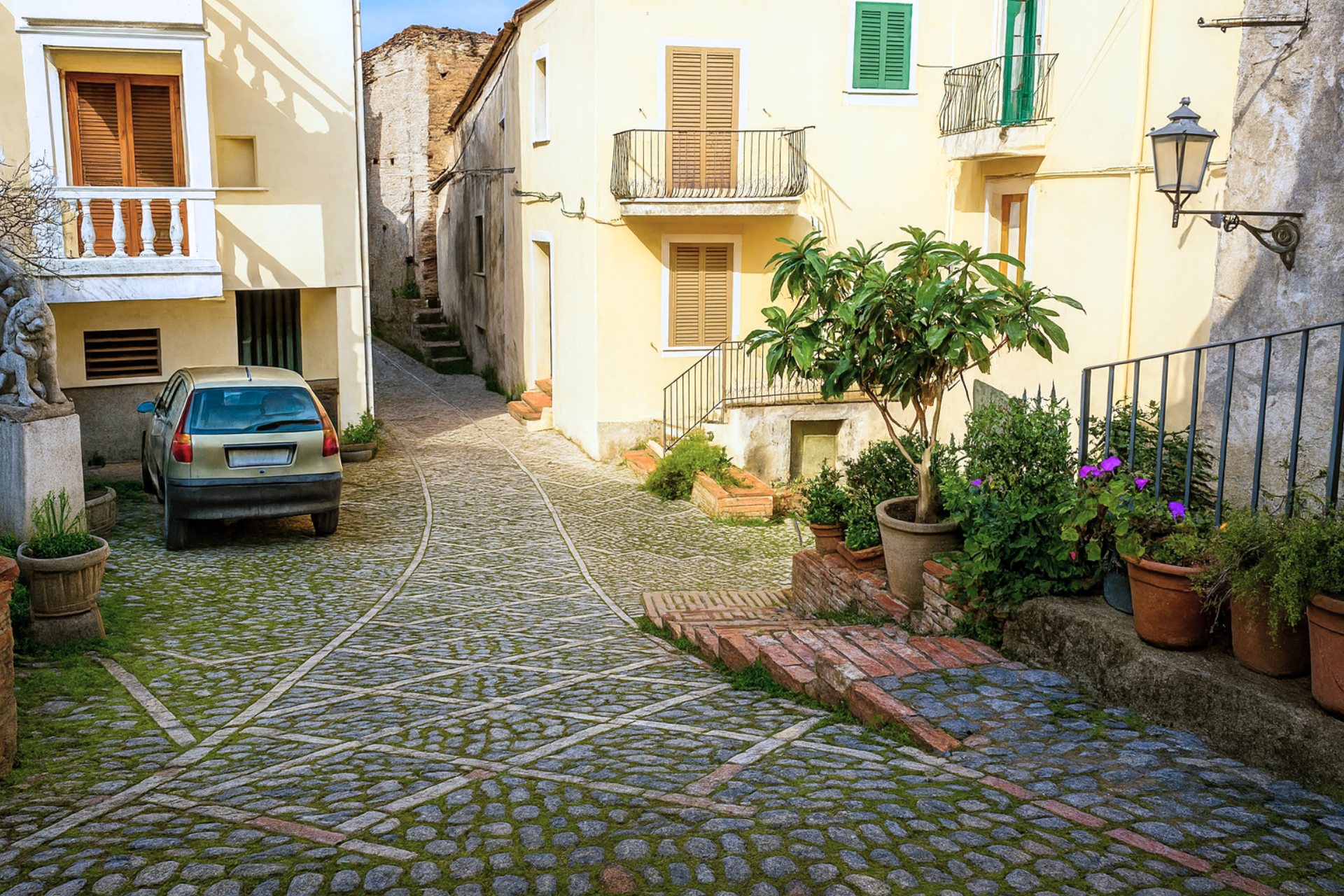
Cropalati: an ancient village suspended between the Ionian Sea and the Sila Greca
Cropalati is a small, picturesque municipality in the province of Cosenza, located in the Sila Greca area, approximately 350 meters above sea level. The village overlooks the Trionto River valley and enjoys a panoramic position that extends from the Sila massif to the shores of the Ionian Sea, visible on clear days.
The Cropalati area has ancient roots: the first settlements likely date back to the Enotrians and the Brettii, peoples who inhabited pre-Roman Calabria.
During the Middle Ages, the town developed around small rural settlements and the presence of Basilian monks, who influenced the local culture, architecture, and traditions.
The name Cropalati may derive from the Greek and refer to “steep place” or “excavated place”, consistent with the morphology of the area.
Nature and Landscape
Cropalati is immersed in a diverse natural environment: hills covered with olive groves, chestnut trees, and Mediterranean scrub, wooded areas of the Sila Greca, expansive views of the Trionto Valley, and nature trails ideal for hiking, walking, and photography.
Nature is one of the area's greatest treasures, offering tranquility, pure air, and a breathtaking landscape.
Architectural remains and religious traditions recount centuries of community history. The village is home to various points of historical and religious interest:
- The Mother Church of Santa Maria Assunta, the spiritual heart of the village
- The Church of San Rocco, a place of profound devotion
- Small shrines and rural chapels
- Glimpses of the historic center with arches, narrow streets, and stone houses
Gastronomy and Traditions
Cropalati's cuisine reflects the rural tradition of eastern Calabria: excellent extra virgin olive oil, rustic dishes such as lagane and chickpeas, homemade pasta, fritters, local cured meats and cheeses, and traditional desserts associated with religious holidays.
Religious celebrations—including those dedicated to San Rocco and the Madonna Assunta—are moments of strong unity and liveliness for the community.